Customers often ask us: “What is the actual difference between acoustic foam and polyester fiber panels? Aren’t they both just ‘soundproofing stuff’?” The short answer is no. They solve related but different problems, and choosing the wrong one wastes both money and wall space.
First, let’s clarify a common misconception. Neither product truly “soundproofs” a room — true soundproofing requires mass, sealing, and decoupling, usually done during construction. What foam and fiber panels actually do is sound absorption: they reduce echo, reverberation, and standing waves inside a room, making speech and music sound clearer.
Acoustic foam (usually melamine or polyurethane) is an open-pore, lightweight material. It is excellent at absorbing mid- and high-frequency reflections, which is why it is the classic choice for vocal booths, home studios, and podcast setups. Its wedge or pyramid design also helps diffuse reflections. However, because it is lightweight, it is relatively weak at low-frequency absorption — bass buildup in corners usually needs heavier bass traps. It is also often sold in darker colors, which some homeowners find too “studio-looking.”
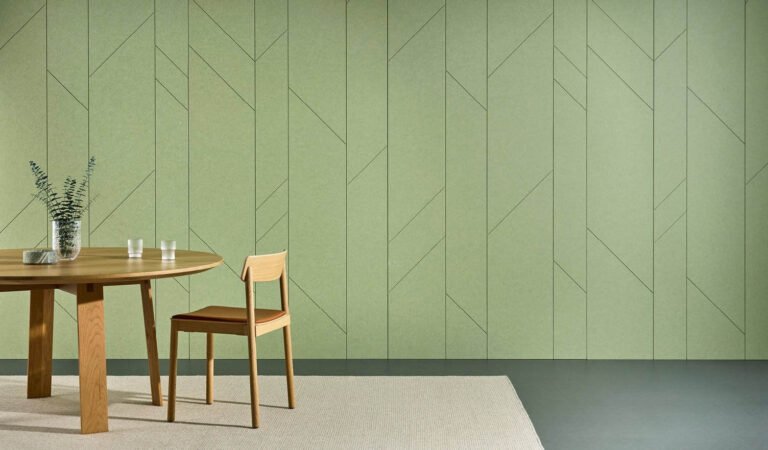
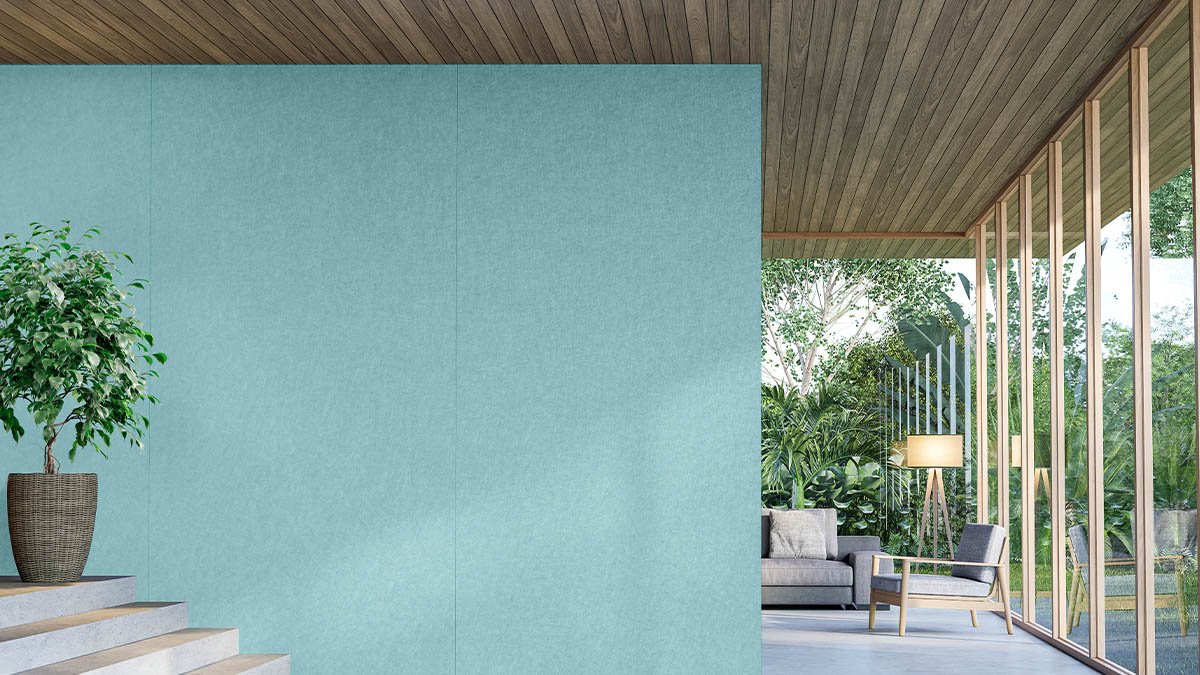
Polyester fiber panels are denser, fiber-based boards pressed from recycled polyester. They absorb a broader frequency range, including more mid-bass, and feel much stiffer on the wall. Crucially, they come in a wide range of colors, can be fabric-wrapped or painted, and are fire-retardant and skin-friendly, making them suitable for schools, offices, nurseries, and living rooms where appearance matters. They are also more durable and do not crumble over time the way cheap foam can.
So how do you choose?
Pick
acoustic foam
if you are building a vocal booth, treating a small home studio, or prioritizing mid/high-frequency clarity on a tight budget.
Pick
polyester fiber panels
if you want broad-band absorption, a clean decorative wall look, fire safety, or use the space for living, working, or teaching.
In practice, many Sonora Acoustic customers combine both: foam behind the recording mic and fiber panels on the main walls and ceiling. If you tell us your room size and use case, our engineering team can recommend the optimal thickness, NRC rating, and layout.